

Contrary to popular belief, Lorem Ipsum is not simply random text. It has roots in a piece of classical Latin literature from 45 BC, making it over 2000 years old.

Most enterprise AI deployments stall not due to flawed algorithmic models, but because the underlying corporate data estate is structurally fragmented. Critical operational information remains siloed across disconnected systems and completely ungoverned at the exact runtime points where autonomous agents must act. This fragmentation produces shallow intelligence—AI that can offer high-level advice or recommendations, but lacks the real-time context and secure platform access required to execute a process to full resolution.
Announced at Knowledge 2026, ServiceNow is addressing this data deficit by introducing a suite of native data capabilities engineered to supply autonomous AI with live, governed enterprise intelligence. By combining advanced semantic mapping, high-performance database engines, and centralized agent control frameworks, the platform bridges the gap between passive data discovery and automated cross-enterprise execution.
To transform generic models into specialized corporate agents, an enterprise must feed them a continuous stream of operational reality. ServiceNow achieves this through an interconnected three-part data architecture that links discovery with automation.

Context Engine
The Context Engine serves as a continuous semantic layer that maps every employee, role, digital asset, business service, and corporate policy across the organization in real time. Rather than working with static text pulls, it integrates the Configuration Management Database (CMDB), active workflow data, and third-party systems to ground every AI decision in precise institutional context. Because it learns continuously from live system activity, this intelligence compounds over time, increasing agent accuracy the more the system runs.
Autonomous Data Analytics
Fueled by innovation from ServiceNow's acquisition of Pyramid Analytics, this layer enables both human professionals and autonomous AI agents to query the entire enterprise data estate using natural, plain language. It bypasses traditional database compilation bottlenecks to surface secure, contextual insights immediately.
ServiceNow Data Catalog & Governance
The ServiceNow Data Catalog provides comprehensive visibility across the corporate data landscape through automated discovery, lineage tracking, and a shared business glossary. It integrates directly with existing enterprise data catalogs, allowing organizations to expand their visibility without displacing legacy software investments. This discovery foundation is paired with Autonomous Data Governance, a mechanism that continuously monitors data pipelines to automatically flag quality violations and enforce corporate security and privacy policies without manual intervention.
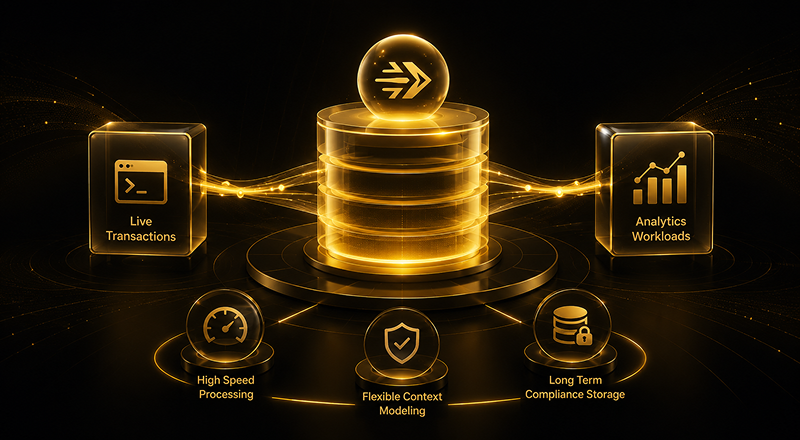
Agentic workloads demand high-speed processing, flexible context modeling, and long-term compliance storage. To support this scale without degrading operational speeds, ServiceNow has expanded RaptorDB Pro, its native high-performance database engine.
RaptorDB Pro eliminates traditional data replication latency through a single hybrid engine that processes both live transactional operations and complex analytical workloads simultaneously on a single infrastructure.
To extend this execution layer outside the platform boundaries, the Workflow Data Fabric coordinates actions across best-of-breed data management environments. Through the newly formed Workflow Data Network, security, quality, and observability partners—such as IBM and Boomi—can push data-health indicators and classification policies directly into active workflows. Under the Partner Passport framework, enterprises can use existing Data Fabric credits to seamlessly activate and consume these certified partner solutions under a single commercial agreement.
As organizations rapidly adopt autonomous tools, a severe governance gap has emerged. AI agents frequently connect to external data sources, third-party applications, and Model Context Protocol (MCP) servers with zero centralized oversight, leaving enterprises exposed to unmonitored system changes and data leakage.
ServiceNow closes this security loophole by treating autonomous agents with the same rigorous compliance standards applied to human employees:
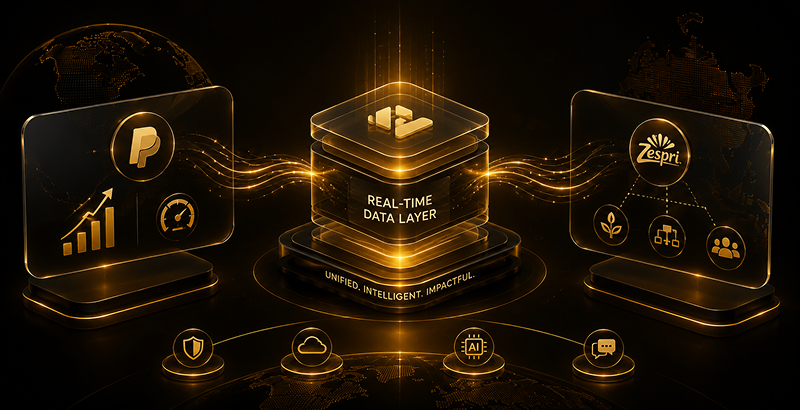
The practical utility of this real-time data layer is validated by its performance inside global, high-volume enterprise architectures:
As organizations rapidly adopt autonomous tools, a severe governance gap has emerged. AI agents frequently connect to external data sources, third-party applications, and Model Context Protocol (MCP) servers with zero centralized oversight, leaving enterprises exposed to unmonitored system changes and data leakage.


